15 Bar vs 20 Bar Espresso: Does Pump Pressure Matter?
In this guide
A 15 bar or 20 bar label tells you how hard the pump can push, not how hard it pushes on your coffee. This explainer compares the two ratings on real home machines from manufacturer specs and Amazon listings checked on 2026-11-10; nothing here was measured or tested by us.
Disclosure: As an Amazon Associate I earn from qualifying purchases. Some brands featured below pay a bonus commission through Amazon Creator Connections. See /disclosure/.
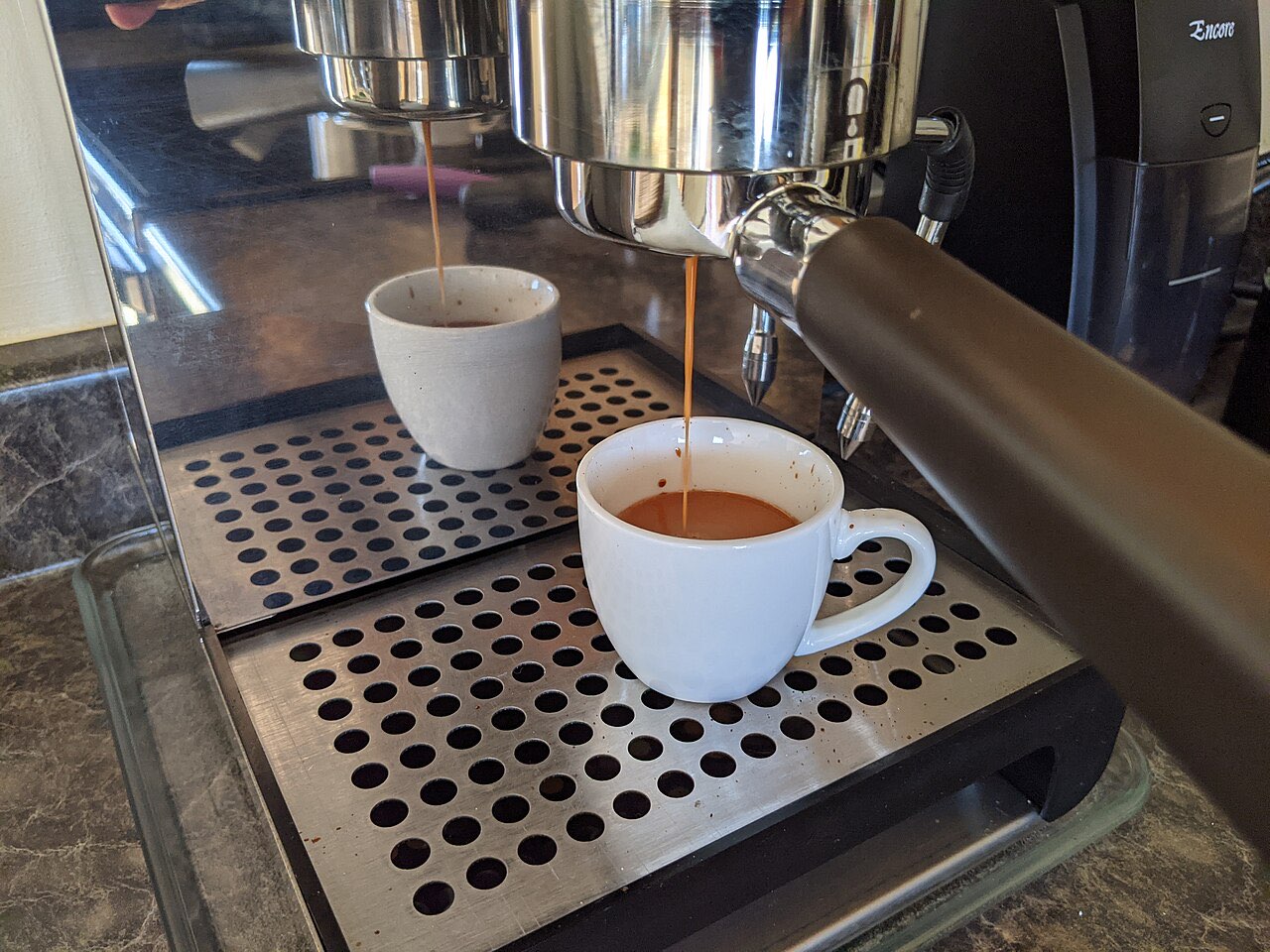
Short answer: Pump pressure does not decide espresso quality. Both 15 bar and 20 bar are maximum pump ratings, and espresso is normally brewed at around 9 bar at the coffee. Choose a machine on basket type, temperature control, pre-infusion and steam power, not on whether the box says 15 or 20.
Where the 9 bar figure comes from
Nine bar is the number most often used as the reference for espresso, and it is about the pressure at the coffee, not the pump’s maximum:
- The Specialty Coffee Association’s survey of baristas found the average shot is pulled at 9 bars, with an 18 to 20 g dose, about 36.5 g out, in 25 to 30 seconds (SCA, 25 Magazine).
- Cimbali, an Italian commercial machine maker, gives 8 to 10 bar and about 25 seconds for an Italian espresso (Cimbali espresso recipe).
- Breville describes its Bambino as a “15 bar Italian pump” followed by 9 bar extraction (Breville Bambino page). That one line is the clearest manufacturer statement that the pump rating and the brewing pressure are different numbers.
What a pump rating actually measures
Most budget home machines use a small vibratory pump. Its rating is the most pressure it can build when the water has nowhere to go. A distributor of Ulka pumps, one of the common makes in home machines, describes its EX5 pump as producing around 15 bars (Ulka Pumps). In use, the pressure the coffee sees depends on how much resistance is in the way:
- The puck. Finer grind, a bigger dose and firmer tamping all raise resistance, and pressure rises with it.
- The basket. A pressurized (dual wall) basket has a small exit hole that creates resistance on its own, so pressure builds even with coarse pre-ground coffee. Breville’s manual says dual wall baskets “regulate the pressure” regardless of grind, dose or tamp (Breville Barista Express instruction book). See pressurized vs non-pressurized baskets.
- A pressure-limiting valve or profile. Some machines cap or shape pressure so the coffee is not pushed too hard. Budget listings rarely say whether one is fitted.
So a 20 bar pump and a 15 bar pump can both deliver the same brewing pressure. Neither number is a promise of stronger or better coffee.
Does more pressure make more crema?
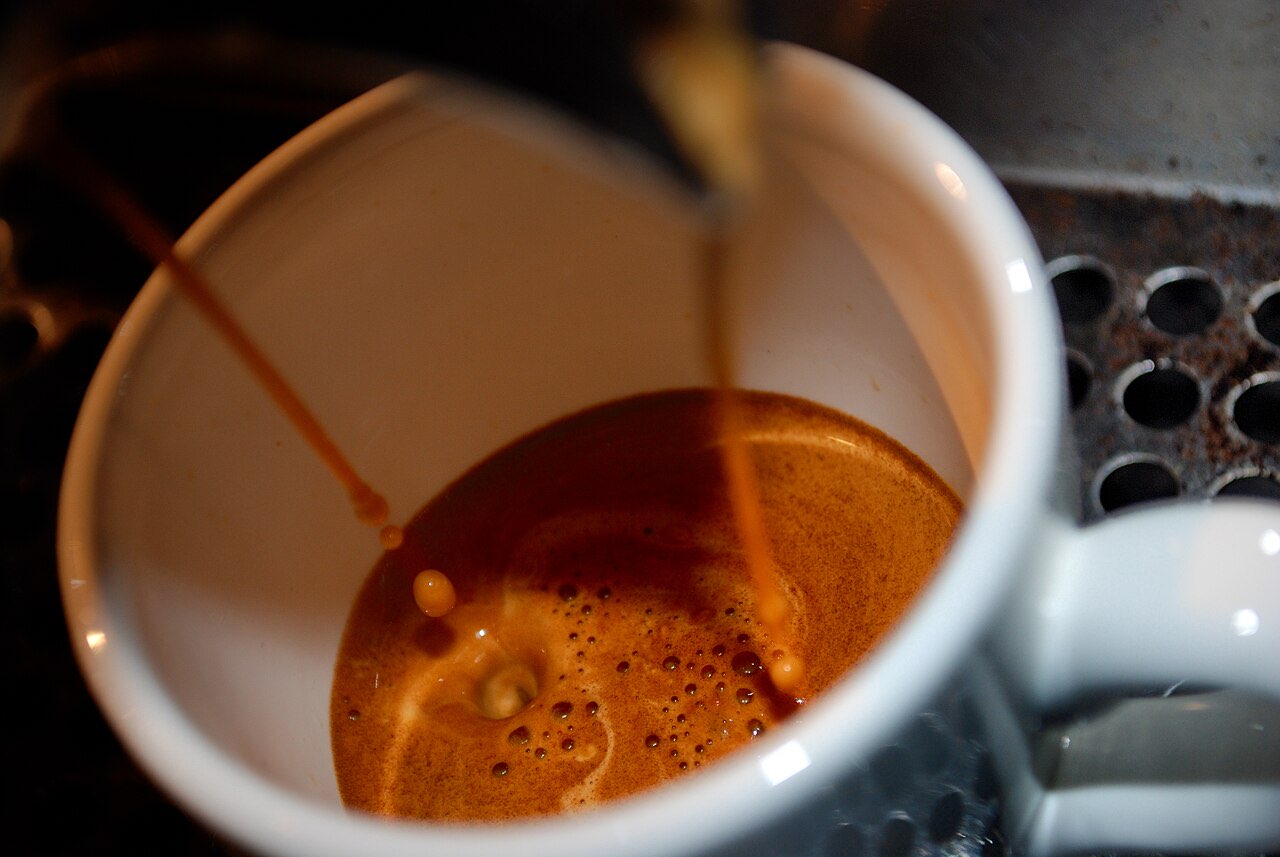
Many budget listings link high bar ratings with rich crema. Crema is a foam of carbon dioxide and coffee oils, so fresh coffee matters to it more than anything else. Pressurized baskets add a second effect: forcing espresso through one small exit hole whips air into the stream, which produces a foamy layer even from pre-ground coffee. That foam can look like generous crema without telling you much about how well the shot extracted. Judge shots by taste and by ratio and time, not by the height of the foam.
Vibratory pumps vs rotary pumps
Nearly every machine in the budget range uses a vibratory pump: small, cheap and quick to build pressure. Rotary pumps, found on many higher-end and commercial machines, are quieter and typically paired with an adjustable pressure setting. The bar rating on either type still describes the pump’s capability, not the brewing pressure. If you see a pump rating on a premium machine, the more useful spec is usually whether pressure can be adjusted or profiled.
15 bar vs 20 bar on real machines
| Machine | Listed pump | Gauge or display | Temperature control | Pre-infusion |
|---|---|---|---|---|
| Breville Bambino BES450 | 15 bar, 9 bar extraction | no | PID | yes |
| De’Longhi Stilosa EC260BK | 15 bar | no | not listed | not listed |
| Neretva 3690 (Featured) | 15 bar | analog gauge | 198°F claimed | yes |
| Casabrews CM5418 | 20 bar | analog gauge | not listed | not listed |
| PlumChef KFJ6828 retro (Featured) | 20 bar | analog gauge | not listed | not listed |
| Havato CM5712 (Featured) | 20 bar | pressure on display | dual-temperature | not listed |
Specs per the Amazon listings checked 2026-11-10 and Breville’s and De’Longhi’s own pages. Check the current price on Amazon.
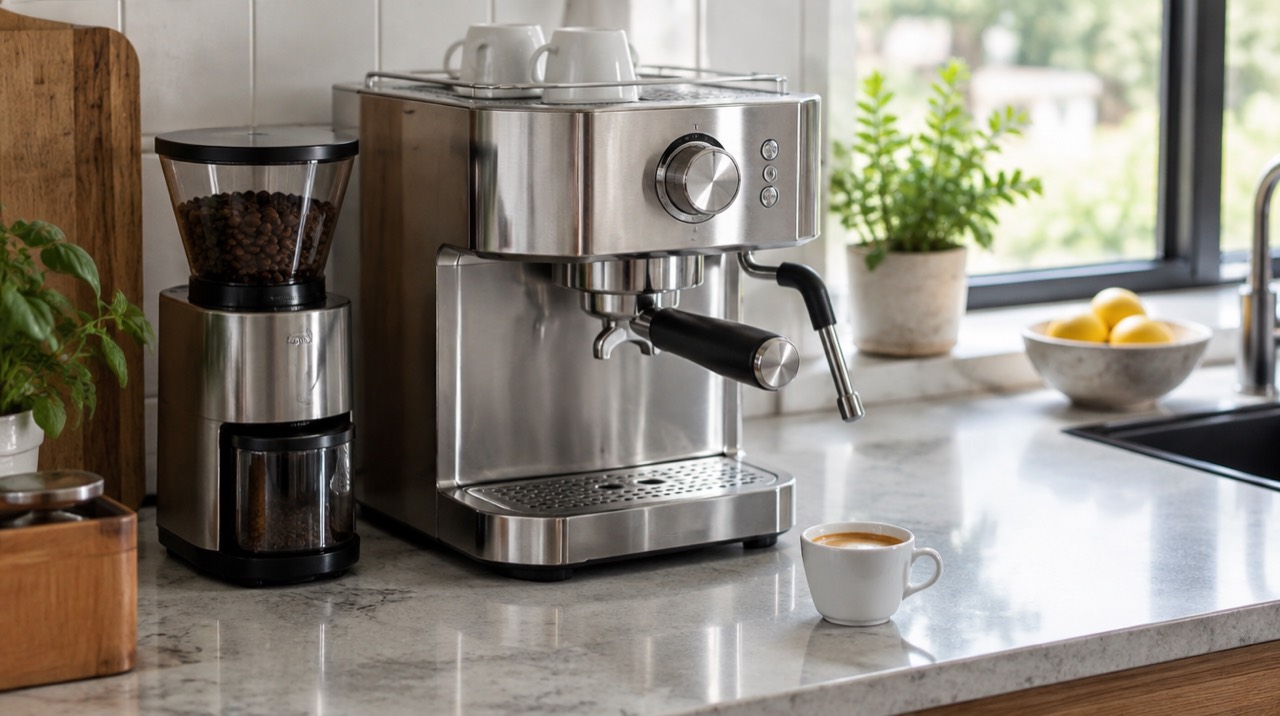
Read across the table and the pattern is plain: the 15 bar machines include the one with the most complete control spec, the Breville Bambino with PID and pre-infusion. The pump rating does not predict which machine gives you more control. The De’Longhi Stilosa is a 15 bar machine aimed at simplicity; the Casabrews CM5418 is a 20 bar machine whose selling point is a gauge on a narrow body. Our best budget espresso machine roundup ranks them on the specs that matter.
- Neretva 3690 15 bar espresso machine on Amazon
- PlumChef KFJ6828 retro-style 20 bar machine on Amazon
- Havato CM5712 20 bar espresso machine on Amazon
What to compare instead of bar
When two machines look alike, these specs separate them far more than the pump rating:
- Baskets included. Single wall and dual wall, or only dual wall? Single wall baskets let you change taste with the grinder.
- Temperature control. PID, a stated brew temperature, or nothing listed. Stable temperature is one of the biggest factors in shot quality.
- Pre-infusion. A low-pressure start that wets the puck before full pressure, which can make shots more forgiving.
- Portafilter size. 51, 54 and 58 mm baskets take different tampers and accessories; 58 mm has the widest accessory choice.
- Tank size and cup clearance. Everyday convenience that the bar number never covers.
- Steam performance. If you make milk drinks, the wand and how the machine switches between brewing and steaming matter more than pump pressure.
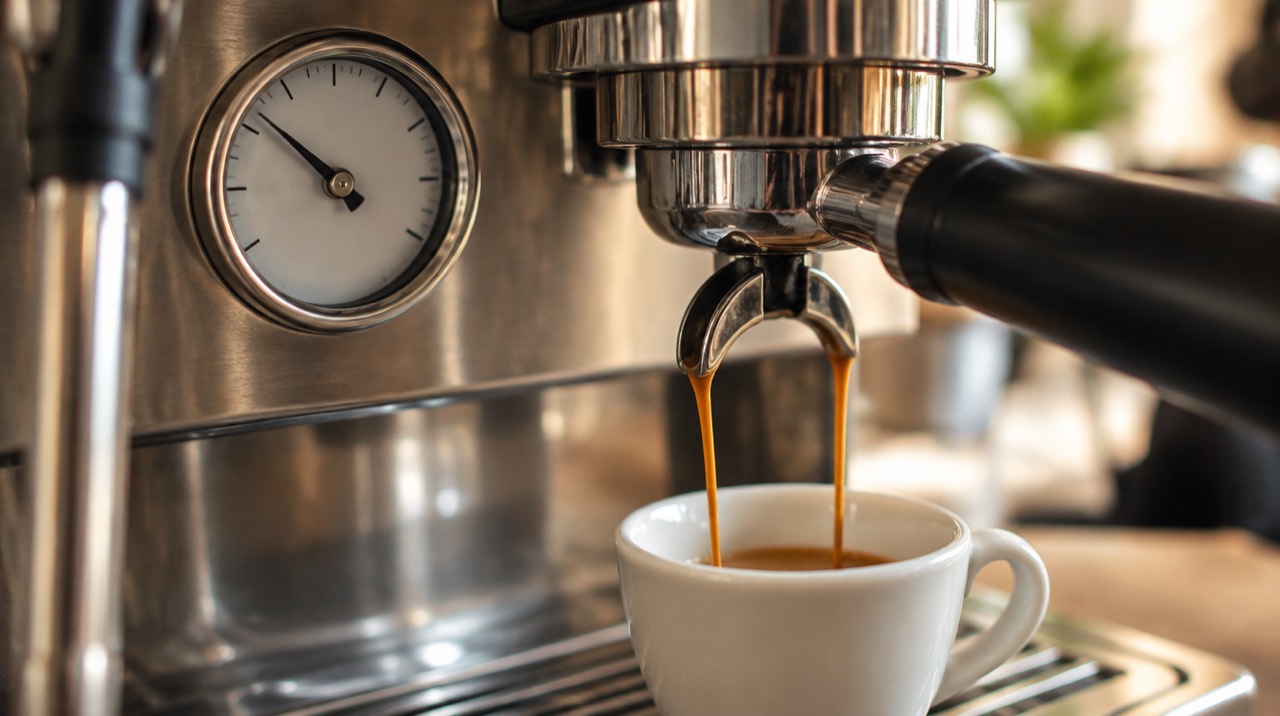
How to read a pressure gauge on a budget machine
A gauge is handy, but treat it as a trend line, not a lab reading:
- Note where the needle sits on a good shot. If the next shot with the same coffee runs far higher or lower, something changed: grind, dose or tamp.
- With pressurized baskets, expect less change. The basket creates much of the resistance, so the needle moves less when you change the grind.
- Do not chase the top of the dial. A choked shot, slow drips and a high needle usually mean the grind is too fine or the dose too big, which tends toward bitter, harsh shots.
- Listings rarely say what the gauge measures. Pump-side and basket pressure are not the same thing, so a reading near 9 is not proof the coffee sees 9 bar.
When pressure does matter
Pressure becomes a real variable on more advanced machines that let you set or profile it, such as machines with an adjustable over-pressure valve or flow control. That is a step beyond the budget category. For a first machine, the jobs that matter are:
- Consistent temperature. A shot brewed too cool tends to taste sour; see why is my espresso sour.
- Ratio and time. Weigh the dose and the yield and aim for around 1:2 in 25 to 30 seconds as a start; the espresso ratio guide and our free espresso ratio calculator help.
- Grind. With single wall baskets, grind is the main dial. A grinder that can go fine enough for espresso matters more than 5 extra bar; see the best budget espresso grinder.
Mistakes to avoid
- Paying more for a bigger bar number. It is a pump ceiling, not a quality grade.
- Grinding finer to raise the needle. Higher pressure from a choked puck usually makes worse espresso, not better.
- Ignoring basket type. Whether the baskets are single wall or dual wall changes what you can control far more than the pump rating does.
- Treating the gauge as exact. Use it to compare your own shots.
Frequently asked questions
Is 20 bar better than 15 bar for espresso?
No. Both numbers are the pump's maximum rating, and both pumps comfortably exceed the roughly 9 bar usually used at the coffee. A 20 bar label does not make stronger or better espresso. Basket type, temperature control and grind decide the shot.
What pressure should espresso be brewed at?
Around 9 bar at the coffee is the usual reference. The SCA's survey of baristas found the average shot pulled at 9 bars, and Cimbali's espresso recipe gives 8 to 10 bar.
Why do manufacturers advertise 15 or 20 bar?
Because the pump has to have headroom: it must push water through a tightly packed puck and keep flowing. The rating describes what the pump can reach, which makes a bigger number easy to market. It is not the pressure on the coffee.
What does the pressure gauge on a budget espresso machine show?
Listings rarely say whether a gauge reads pump-side pressure or pressure at the basket, and with pressurized baskets much of the resistance comes from the basket itself. Use the gauge as a consistency check from shot to shot, not as a precise brew-pressure reading.
Can too much pressure hurt espresso?
Extra resistance pushes pressure up, and very high pressure on a fine, tightly packed puck can make the shot slow and harsh. Many better machines limit pressure with a valve or a profile. If shots choke, grind coarser or reduce the dose rather than looking for more bar.
Keep reading
- Espresso Ratio Guide: Dose, Yield and Shot Time
The espresso ratio guide for home baristas: dose, yield and shot time for ristretto, normale and lungo, with a 1:2 starting recipe and how to adjust it by taste.
Updated Nov 2026 - Why Is My Espresso Sour? Causes and Fixes
Why is my espresso sour? The usual causes are a fast, under-extracted shot, low brew temperature or a short ratio. Here is how to diagnose each and fix it.
Updated Nov 2026 - Best Budget Espresso Machine: Spec-Based Picks
The best budget espresso machine for your kitchen, chosen on baskets, temperature control, tank and footprint. Spec-based picks from Breville, De'Longhi and more.
Updated Nov 2026